---
title: Blog & Articles - The Sullivan GroupThe Sullivan Group | Surgery
description: Surgery |
---
[](https://www.thesullivangroup.com/RSQSolutions)
(630)268-1188
- [ED Guidance](https://www.thesullivangroup.com/RSQSolutions/services-solutions/emr-decision-support/nuance/)
- Education
- Ambulatory
- [Primary Care](https://info.thesullivangroup.com/primary-care-cme-training)
- [Urgent Care](https://info.thesullivangroup.com/urgent-care-training)
- [Specialty Care](https://info.thesullivangroup.com/specialty-care-cme-training)
- Enterprise
- [Physician Integration](https://info.thesullivangroup.com/physician-integration-education)
- [Nursing Clinical Excellence](https://info.thesullivangroup.com/emergency-department-nursing-training)
- [Patient Safety Fundamentals](https://info.thesullivangroup.com/patient-safety-fundamentals-training)
- [Medical-Legal Essentials](https://info.thesullivangroup.com/medical-legal-training)
- [Communication & Resolution](https://info.thesullivangroup.com/communication-resolution-training)
- [Patient Experience](https://info.thesullivangroup.com/patient-experience-training)
- [Behavioral Health & Violence](https://info.thesullivangroup.com/behaviorial-health-violence-training)
- Hospital-Based
- [Emergency Medicine](https://info.thesullivangroup.com/emergency-medicine-cme-training)
- [Obstetrics](https://info.thesullivangroup.com/training-to-improve-patient-safety-in-obstetrics)
- [Hospital Medicine](https://info.thesullivangroup.com/hospital-medicine-cme-training)
- [Surgery](https://info.thesullivangroup.com/surgery-cme-training)
- [Triage](https://info.thesullivangroup.com/triage-training)
- [Critical Access Hospitals](https://info.thesullivangroup.com/critical-access-hospital-cme-training)
- [RSQ® Consulting](https://www.thesullivangroup.com/RSQSolutions/services-solutions/rsq-consulting-services/)
- [EMR Content](https://www.thesullivangroup.com/RSQSolutions/services-solutions/emr-decision-support/)
- [MEDHOST](https://www.thesullivangroup.com/RSQSolutions/services-solutions/emr-decision-support/medhost-edis/)
- [PulseCheck](https://www.thesullivangroup.com/RSQSolutions/services-solutions/emr-decision-support/optum-ed-pulsecheck/)
- [MEDITECH](https://www.thesullivangroup.com/RSQSolutions/services-solutions/emr-decision-support/meditech/)
- [Epic](https://www.thesullivangroup.com/RSQSolutions/services-solutions/emr-decision-support/epic/)
- [Cerner](https://www.thesullivangroup.com/RSQSolutions/services-solutions/emr-decision-support/cerner/)
- [About](https://www.thesullivangroup.com/RSQSolutions/index.php/about-us)
- [Our Team](https://www.thesullivangroup.com/RSQSolutions/about-us/our-team/)
- [Innovation Lab](https://info.thesullivangroup.com/innovation-lab)
- [Clients & Partners](https://www.thesullivangroup.com/RSQSolutions/about-us/clients-partners/)
- [RSQ® Collaborative](https://www.thesullivangroup.com/RSQSolutions/about-us/rsq-collaborative/)
- [Media](https://www.thesullivangroup.com/RSQSolutions/news-events/media/)
- Resources
- [Blog](https://www.thesullivangroup.com/RSQSolutions/rsq-corner/blog-articles/)
- [Clinical Cases](https://www.thesullivangroup.com/RSQSolutions/clinical-cases/)
- [Risk Resources](https://www.thesullivangroup.com/RSQSolutions/rsq-corner/risk-resources/)
- [Newsletters](https://www.thesullivangroup.com/RSQSolutions/index.php/rsq-corner/tsg-quarterly)
- [Webinars](https://www.thesullivangroup.com/RSQSolutions/rsq-corner/webinars/)
- [Contact](https://www.thesullivangroup.com/RSQSolutions/contact-us/)

# Blog & Articles
## [Improving Healthcare Handoffs](https://blog.thesullivangroup.com/healthcare-handoffs)
June 22, 2021
[](https://blog.thesullivangroup.com/healthcare-handoffs)
\[6 MIN READ\]
Any discussion of communication in healthcare must include the process of transferring patients and their vital medical information from one provider to another and/or from one healthcare setting to another.
Such transfers are known as healthcare handoffs.
Examples include when a patient is transferred from an ambulance to an ED or when a surgical patient is moved from the recovery room to a surgical floor.
A person-to-person handoff takes place when, for example, a physician going off duty signs off to the evening on-call doctor or when nurses report to each other at shift changes.
Handoffs are specific circumstances in healthcare that are prone to [medical errors](https://blog.thesullivangroup.com/rsqsolutions/malpractice-claims-medical-errors-one-real-target).
- [Tweet](https://twitter.com/share)
## [Surgery Malpractice: Are Surgeons More Prone to Complaints?](https://blog.thesullivangroup.com/surgery-malpractice-are-surgeons-more-prone-to-complaints)
April 28, 2020
[](https://blog.thesullivangroup.com/surgery-malpractice-are-surgeons-more-prone-to-complaints)
\[7 MIN READ\]
Among physicians, surgeons are at increased medico-legal risk compared to non-surgeons; they also have more medical malpractice claims and claims paid per year. Jena et al.1 found that the probability of facing a claim varied from 15.3% in general surgery to only 5.2% in family general practice. In a recent review of National Practitioner Data Bank (NPDB) records, Schaffer et al.2 noted that the number of paid claims per 1,000 physician years was 30.0 for general surgeons and only 7.1 for internal medicine. Although there are a number of factors responsible for this wide variation, the correlation between the physician-patient relationship and the risk of a medical malpractice suit is well established.
A recent study by Tibble et al.3 explored the incidence and classification of complaints about physicians, finding that surgeons attracted 2.3 times as many complaints as non-surgeon physicians. Although the thrust of the article remains valid and the implications are concerning, there are a few factors that modify the severity of the concern.
- [Tweet](https://twitter.com/share)
## [Surgical Error Cases](https://blog.thesullivangroup.com/surgical-error-cases)
April 13, 2020
[](https://blog.thesullivangroup.com/surgical-error-cases)
\[8 MIN READ\]
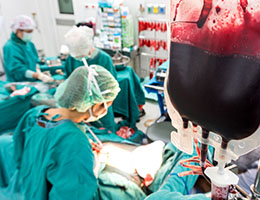
We are all fallible. Despite their best efforts, physicians, nurses, other healthcare workers, and indeed all humans, make errors. It is an essential component of our being. It is widely accepted that a systems approach to error prevention can counteract this fallibility. Nonetheless, errors do occur. These failures can often be explained by the “Swiss Cheese Model” of error. Multiple processes are designed to prevent a type of error. Each individual process may be imperfect but used in combination one process will succeed where another may fail. Like the holes in Swiss cheese, when these imperfections are aligned and multiple processes fail, errors occur.
Below I present three cases from which we can gain perspective on how poor communication, systems errors, and cognitive bias contribute to [surgical errors](https://blog.thesullivangroup.com/surgical-errors).
- [Tweet](https://twitter.com/share)
## [Informed Consent Process Forms & Documentation](https://blog.thesullivangroup.com/informed-consent-form)
September 10, 2019
[](https://blog.thesullivangroup.com/informed-consent-form)
\[7 MIN READ\]
Obtaining the informed consent of the patient is required in all states before an invasive procedure that carries a material risk of harm is performed.
This is a non-delegable duty of the practitioner who is going to perform the procedure; this means that the practitioner is ultimately responsible for the validity of the consent and cannot avoid liability by claiming that it was someone else’s responsibility.
However, obtaining informed consent should not be construed to be an obstacle. Obtaining informed consent can be a mechanism for reconciling the expectations of all parties involved.
- [Tweet](https://twitter.com/share)
## [Surgical Errors](https://blog.thesullivangroup.com/surgical-errors)
September 4, 2019
[](https://blog.thesullivangroup.com/surgical-errors)
\[7 MIN READ\]
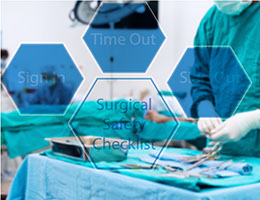
The care of the surgical patient is dependent upon doctors, nurses, technicians and both office and hospital staff. Like all humans, despite their best efforts, they make mistakes. Encouraging them to “try harder” simply will not work.
To reduce surgical errors we need to identify root causes and institute system-based processes to prevent them.
Studies have suggested specific areas that offer opportunities for improvement. Kim et al.\[1\] noted that adverse events from surgical intervention are more commonly due to preoperative and/or postoperative errors. These include delay in diagnosis and/or treatment and communication errors between the healthcare team and the patient/family or other members of the healthcare team. Process measures that can address these issues include:
- [Tweet](https://twitter.com/share)
## [Medication Error Case: Opioid Adverse Drug Event in the Hospital](https://blog.thesullivangroup.com/medication-error-case-opioid-adverse-drug-event-in-hospital)
June 18, 2019
[](https://blog.thesullivangroup.com/medication-error-case-opioid-adverse-drug-event-in-hospital)
\[6 MIN READ\]
An *adverse drug event (ADE)* is defined as harm experienced by a patient resulting from exposure to a medication. An ADE can be caused by an error or poor care, but it is estimated that about half of ADEs **are** caused by a medication error; these are known as *preventable adverse drug events.*
Statistics are staggering; they reveal that ADEs lead to 700,000 ED visits, 100,000 hospitalizations, and between 7,000 and 9,000 deaths every year in the U.S. Even within the “safe” confines of hospital care, about 5% of hospitalized patients experience an ADE.
Opioid analgesic use in the hospital setting is usually safe, but it is also associated with serious ADEs. In this issue, we present a case of an adverse drug event that illustrates many of the features known to contribute to opioid-related ADEs in the hospital. Whether this ADE was preventable, treatable or unavoidable – you be the judge!
- [Tweet](https://twitter.com/share)
## [Wrong Site Surgery Statistics](https://blog.thesullivangroup.com/wrong-site-surgery-statistics)
April 15, 2019
[](https://blog.thesullivangroup.com/wrong-site-surgery-statistics)
\[6 MIN READ\]
The Joint Commission (TJC) defines a Sentinel Event as “a patient safety event (not primarily related to the natural course of the patient’s illness or underlying condition) that reaches a patient and results in any of the following: death, permanent harm, or severe temporary harm and intervention required to sustain life.” TJC adopted a Sentinel Event Policy in 1996 in an effort to assist hospitals in voluntarily reporting, evaluating and reducing risk, and preventing patient harm. The term “never event”was first described in 2001 by Dr. Kenneth Kizer of The National Quality Forum (NQF) in reference to significant adverse medical errors that should never have taken place. The NQF currently uses this term when referring to **serious reportable events** deemed preventable. Whatever you choose to call these, they are simply events that really should not happen.
- [Tweet](https://twitter.com/share)
## [Retained Surgical Sponge: Never Means NEVER!](https://blog.thesullivangroup.com/retained-surgical-sponge-never-means-never)
September 5, 2018
[](https://blog.thesullivangroup.com/retained-surgical-sponge-never-means-never)
**\[4 MIN READ\]**
# **The Problem**
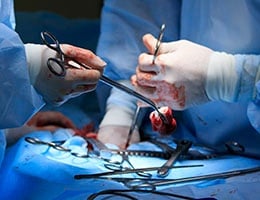
The term “Never Events” was used in 2001 to describe a subset of [medical errors](https://blog.thesullivangroup.com/preventing-medical-errors-7-things-every-provider-needs-to-know) that, ideally, should never occur. Also known as “Serious Reportable Events,” they encompass a wide variety of surgical, device, patient protection, care management, environmental, radiologic and criminal events. The Agency for Healthcare Research and Quality currently defines 29 such events,[\[i\]](https://blog.thesullivangroup.com/topic/surgery/page/1#_edn1) one of which is defined as “Unintended retention of a [foreign object](https://blog.thesullivangroup.com/rsqsolutions/surgery-safety-issues) in a patient after surgery or other procedure.” The Joint Commission (TJC) lists 31 types of sentinel events; of such events voluntarily reported to TJC, the most common is “Unintended Retention of a Foreign Body.”[\[ii\]](https://blog.thesullivangroup.com/topic/surgery/page/1#_edn2) In a review of [paid malpractice claims](https://blog.thesullivangroup.com/rsqsolutions/malpractice-claims-medical-errors-one-real-target) from the National Practitioner Data Bank, Mehtsun and associates[\[iii\]](https://blog.thesullivangroup.com/topic/surgery/page/1#_edn3) found that of 1,126 surgical retained foreign body events, 5% resulted in death, 16% in permanent injury, and 78% in temporary injury. This simply cannot be allowed to continue.
- [Tweet](https://twitter.com/share)
## [How Disruptive Behavior in Healthcare Impacts Patient Safety](https://blog.thesullivangroup.com/consequences-patient-safety-implications-disruptive-behavior-healthcare)
February 5, 2018
[](https://blog.thesullivangroup.com/consequences-patient-safety-implications-disruptive-behavior-healthcare)
### **Surgery Is a Team Sport**
As a Vascular Surgeon, I have had the honor and privilege of serving not only as an Attending Surgeon, but as a Division Chief, Professor of Surgery, Surgical Residency Director and Chairman of Surgery. One’s perspective on incivility in the operating room (OR) depends on one’s position and responsibility. I was trained during a period of time when bombastic behavior by the senior surgeon was accepted, sometimes expected, and always legendary. Shall I admit to being a reformed sinner? Shouldn’t we all, in one way or another? My mantra to the residents, the attending staff, the OR staff (and anyone else who will listen) has always been that “surgery is a team sport.” When the team functions well, the patient does well.
- [Tweet](https://twitter.com/share)
## [Incivility & Disruptive Behavior in Healthcare](https://blog.thesullivangroup.com/disruptive-behavior-in-healthcare)
January 29, 2018
[](https://blog.thesullivangroup.com/disruptive-behavior-in-healthcare)
Many would contend that we currently live in a polarized society in the United States. Whether the issue is the environment, healthcare, taxes, religion, economic theory, immigration, globalization or politics, interaction between competing philosophies is often characterized by animosity, accusations, verbal abuse, and even physical harm. Make no mistake — this has been going on since the Garden of Eden (Ask Cain; better yet, ask Abel!). The impact on society is rarely, if ever, beneficial.
- [Tweet](https://twitter.com/share)
[All posts](https://blog.thesullivangroup.com/all) [Next](https://blog.thesullivangroup.com/topic/surgery/page/2)
[](https://info.thesullivangroup.com/case-study-dx-claims-landing-page)
### Like this Content? --- Sign up for email updates
### Popular Posts
POST SEARCH

### Connect
[Facebook](https://www.facebook.com/TSGRSQ) [Twitter](https://twitter.com/RSQ_Solutions) [YouTube](https://www.youtube.com/channel/UChAWYCblnx-aSdI8c4PYwjw/feed?view_as=public) [Google+](https://plus.google.com/109532511856522423273) [Linkedin](https://www.linkedin.com/company/the-sullivan-group-tsg-?trk=company_logo)
### Ambulatory
- [Primary Care](https://info.thesullivangroup.com/primary-care-cme-training)
- [Urgent Care](https://info.thesullivangroup.com/urgent-care-training)
- [Specialty Care](https://info.thesullivangroup.com/specialty-care-cme-training)
- Free Standing ED
- Ambulatory Surgery Center
### Enterprise
- [Physician Integration](https://info.thesullivangroup.com/physician-integration-education)
- [Nursing Clinical Excellence](https://info.thesullivangroup.com/emergency-department-nursing-training)
- [Patient Safety Fundamentals](https://info.thesullivangroup.com/patient-safety-fundamentals-training)
- [Medical-Legal Essentials](https://info.thesullivangroup.com/medical-legal-training)
- [Communication & Resolution](https://info.thesullivangroup.com/communication-resolution-training)
- [Patient Experience](https://info.thesullivangroup.com/patient-experience-training)
- [Behavioral Health & Violence](https://info.thesullivangroup.com/behaviorial-health-violence-training)
### Hospital-Based
- [Emergency Medicine](https://info.thesullivangroup.com/emergency-medicine-cme-training)
- [Obstetrics](https://info.thesullivangroup.com/training-to-improve-patient-safety-in-obstetrics)
- [Hospital Medicine](https://info.thesullivangroup.com/hospital-medicine-cme-training)
- [Surgery](https://info.thesullivangroup.com/surgery-cme-training)
- [Triage](https://info.thesullivangroup.com/triage-training)
### Contact Us
- The Sullivan Group
- 3513 Brighton BLVD
Suite 485
Denver, CO 80216
- Inquiries: [info@thesullivangroup.com](mailto:info@thesullivangroup.com)
- Comments: [comments@thesullivangroup.com](mailto:comments@thesullivangroup.com)
- Support: [support@thesullivangroup.com](mailto:support@thesullivangroup.com)
Copyright © 1998 - 2024, The Sullivan Group, All Rights Reserved.
These materials comprise the proprietary information of The Sullivan Group. Unauthorized use, copying or dissemination of these materials is strictly prohibited. U.S. Patent No. 7,197,492. Web Design By [Eye9 Design](http://www.eye9design.com)
[Terms of Website Use](https://www.thesullivangroup.com/RSQSolutions/terms-of-use/) | [Privacy Policy](https://www.thesullivangroup.com/RSQSolutions/privacy-policy/)