---
title: Blog & Articles - The Sullivan GroupThe Sullivan Group | Hospital Medicine
description: Hospital Medicine |
---
[](https://www.thesullivangroup.com/RSQSolutions)
(630)268-1188
- [ED Guidance](https://www.thesullivangroup.com/RSQSolutions/services-solutions/emr-decision-support/nuance/)
- Education
- Ambulatory
- [Primary Care](https://info.thesullivangroup.com/primary-care-cme-training)
- [Urgent Care](https://info.thesullivangroup.com/urgent-care-training)
- [Specialty Care](https://info.thesullivangroup.com/specialty-care-cme-training)
- Enterprise
- [Physician Integration](https://info.thesullivangroup.com/physician-integration-education)
- [Nursing Clinical Excellence](https://info.thesullivangroup.com/emergency-department-nursing-training)
- [Patient Safety Fundamentals](https://info.thesullivangroup.com/patient-safety-fundamentals-training)
- [Medical-Legal Essentials](https://info.thesullivangroup.com/medical-legal-training)
- [Communication & Resolution](https://info.thesullivangroup.com/communication-resolution-training)
- [Patient Experience](https://info.thesullivangroup.com/patient-experience-training)
- [Behavioral Health & Violence](https://info.thesullivangroup.com/behaviorial-health-violence-training)
- Hospital-Based
- [Emergency Medicine](https://info.thesullivangroup.com/emergency-medicine-cme-training)
- [Obstetrics](https://info.thesullivangroup.com/training-to-improve-patient-safety-in-obstetrics)
- [Hospital Medicine](https://info.thesullivangroup.com/hospital-medicine-cme-training)
- [Surgery](https://info.thesullivangroup.com/surgery-cme-training)
- [Triage](https://info.thesullivangroup.com/triage-training)
- [Critical Access Hospitals](https://info.thesullivangroup.com/critical-access-hospital-cme-training)
- [RSQ® Consulting](https://www.thesullivangroup.com/RSQSolutions/services-solutions/rsq-consulting-services/)
- [EMR Content](https://www.thesullivangroup.com/RSQSolutions/services-solutions/emr-decision-support/)
- [MEDHOST](https://www.thesullivangroup.com/RSQSolutions/services-solutions/emr-decision-support/medhost-edis/)
- [PulseCheck](https://www.thesullivangroup.com/RSQSolutions/services-solutions/emr-decision-support/optum-ed-pulsecheck/)
- [MEDITECH](https://www.thesullivangroup.com/RSQSolutions/services-solutions/emr-decision-support/meditech/)
- [Epic](https://www.thesullivangroup.com/RSQSolutions/services-solutions/emr-decision-support/epic/)
- [Cerner](https://www.thesullivangroup.com/RSQSolutions/services-solutions/emr-decision-support/cerner/)
- [About](https://www.thesullivangroup.com/RSQSolutions/index.php/about-us)
- [Our Team](https://www.thesullivangroup.com/RSQSolutions/about-us/our-team/)
- [Innovation Lab](https://info.thesullivangroup.com/innovation-lab)
- [Clients & Partners](https://www.thesullivangroup.com/RSQSolutions/about-us/clients-partners/)
- [RSQ® Collaborative](https://www.thesullivangroup.com/RSQSolutions/about-us/rsq-collaborative/)
- [Media](https://www.thesullivangroup.com/RSQSolutions/news-events/media/)
- Resources
- [Blog](https://www.thesullivangroup.com/RSQSolutions/rsq-corner/blog-articles/)
- [Clinical Cases](https://www.thesullivangroup.com/RSQSolutions/clinical-cases/)
- [Risk Resources](https://www.thesullivangroup.com/RSQSolutions/rsq-corner/risk-resources/)
- [Newsletters](https://www.thesullivangroup.com/RSQSolutions/index.php/rsq-corner/tsg-quarterly)
- [Webinars](https://www.thesullivangroup.com/RSQSolutions/rsq-corner/webinars/)
- [Contact](https://www.thesullivangroup.com/RSQSolutions/contact-us/)

# Blog & Articles
## [Improving Healthcare Handoffs](https://blog.thesullivangroup.com/healthcare-handoffs)
June 22, 2021
[](https://blog.thesullivangroup.com/healthcare-handoffs)
\[6 MIN READ\]
Any discussion of communication in healthcare must include the process of transferring patients and their vital medical information from one provider to another and/or from one healthcare setting to another.
Such transfers are known as healthcare handoffs.
Examples include when a patient is transferred from an ambulance to an ED or when a surgical patient is moved from the recovery room to a surgical floor.
A person-to-person handoff takes place when, for example, a physician going off duty signs off to the evening on-call doctor or when nurses report to each other at shift changes.
Handoffs are specific circumstances in healthcare that are prone to [medical errors](https://blog.thesullivangroup.com/rsqsolutions/malpractice-claims-medical-errors-one-real-target).
- [Tweet](https://twitter.com/share)
## [Strategies to Improve Provider-Patient Communication](https://blog.thesullivangroup.com/strategies-to-improve-provider-patient-communication)
October 29, 2019
[](https://blog.thesullivangroup.com/strategies-to-improve-provider-patient-communication)
\[6 MIN READ\]
Physicians, nurses and other “healers” have had special relationships with patients for centuries. This unique bond between those who provide medical treatment and those who receive their care is currently being endangered by a massive and impersonal healthcare delivery system that is becoming more dependent on automation and technology with each passing year. The good news is that patient attitudes, impressions, and subsequent compliance with treatment plans can be positively influenced when healthcare professionals improve their communication skills with their patients.
Studies show that there is a clear relationship between high [patient satisfaction](https://blog.thesullivangroup.com/rsqsolutions/improve-hcahps-patient-satisfaction-survey) and healthcare organizations that provide safe, quality care. A report by Health Grades (May 2012) noted that hospitals that were ranked (by patients) in the top percentages for [nursing and physician communication](https://info.thesullivangroup.com/case-study-patientset-landing-page) had lower rates of adverse patient safety events. For example, bed sores occurred approximately 46% more frequently in hospitals that patients had ranked in the lowest 10% for provider communication.
- [Tweet](https://twitter.com/share)
## [Chest Pain Malpractice Claims & "Bedside Maneuvers"](https://blog.thesullivangroup.com/rsqsolutions/chest-pain-malpractice-claims)
July 15, 2019
[](https://blog.thesullivangroup.com/rsqsolutions/chest-pain-malpractice-claims)
\[3 MIN READ\]
Malpractice claims related to the chief complaint of chest pain continue to plague clinicians. Foremost among these claims is the allegation of “missed MI,” which has now been expanded to include missed unstable angina as well as missed actual myocardial infarction.
Although the evaluation of the adult with chest pain is fraught with many pitfalls, one of the most glaring yet avoidable errors is the reliance upon “bedside maneuvers” to exclude the diagnosis of coronary etiology.
- [Tweet](https://twitter.com/share)
## [Discharge Instructions for Patients: Best Practices](https://blog.thesullivangroup.com/discharge-instructions-for-patients-best-practices)
May 20, 2019
[](https://blog.thesullivangroup.com/discharge-instructions-for-patients-best-practices)
\[9 MIN READ\]
Hospital discharge is cited as a vulnerable point in a patient’s care transition.
Its effective execution has significant implications on a patient’s recovery trajectory.
The most effective tool in a clinician’s toolbox to promote patient healing is the effective delivery of communicating discharge instructions for patients.
## The Wrong Way to Communicate Discharge Instructions
Before discussing best practices for reviewing discharge instructions with patients, let us review what patient discharge should NOT look like:
- [Tweet](https://twitter.com/share)
## [Code STEMI: Calling Dr. Herrick](https://blog.thesullivangroup.com/code-stemi-calling-dr.-herrick)
October 5, 2017
[](https://blog.thesullivangroup.com/code-stemi-calling-dr.-herrick)
We hear the overhead announcements all the time in the hospital … Code Blue … Code Red … and more recently, Code Trauma … Code STEMI … [Code Stroke](https://blog.thesullivangroup.com/code-stroke-a-syndrome-of-subtraction) … and [Code Sepsis](https://blog.thesullivangroup.com/code-sepsis-recognize-resuscitate-and-refer). From the standpoint of risk and safety, these latter four are the “Codes” that practitioners and nurses must master in order to deliver the best possible care in the safest manner, thereby reducing risk to patients and clinicians alike. Previous blogs featured two time-sensitive emergencies: Code Stroke and Code Sepsis. Today I will highlight a third time-sensitive “code” — Code STEMI (ST-elevation MI.)
- [Tweet](https://twitter.com/share)
## [Preventing Surgical Site Infections](https://blog.thesullivangroup.com/preventing-surgical-site-infections)
September 25, 2017
[](https://blog.thesullivangroup.com/preventing-surgical-site-infections)
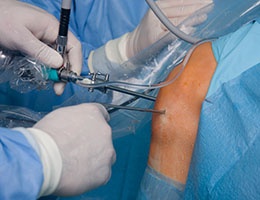
Surgical Site infections (SSIs) occur in 2% to 5% of surgery patients. This category of infection comprises approximately 22% of all [healthcare-associated infections](https://blog.thesullivangroup.com/healthcare-associated-infections) and has a 3% mortality. Patients with SSIs require significant care and average 7 to 10 days of increased length of hospital stay. The cost of providing care for a single SSI ranges from $3,000 to $29,000. The total cost of care for SSIs is estimated at $10 billion dollars per year. There are of course additional expenditures for outpatient care, readmissions, and care of long-term disabilities.
- [Tweet](https://twitter.com/share)
## [Preventing CAUTI (Catheter-Associated UTI)](https://blog.thesullivangroup.com/preventing-cauti)
September 18, 2017
[](https://blog.thesullivangroup.com/preventing-cauti)
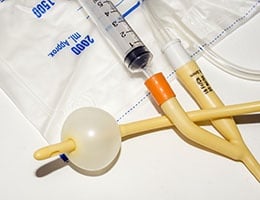
Catheter-associated urinary tract infections are the fourth most common [HAI](https://blog.thesullivangroup.com/healthcare-associated-infections). They comprise over 12% of all acquired infections in acute care hospitals. 93,300 of these UTIs are estimated to be acquired in hospitals each year, with an estimated death toll of 13,000 patients.
- [Tweet](https://twitter.com/share)
## [Case: Avoiding Cognitive Bias in Diagnosing Sepsis](https://blog.thesullivangroup.com/case-avoiding-cognitive-bias-in-diagnosing-sepsis)
September 11, 2017
[](https://blog.thesullivangroup.com/case-avoiding-cognitive-bias-in-diagnosing-sepsis)
If you ask leadership at many hospital organizations to name their highest current quality priority, many will respond that it is **sepsis**. In recent years, medical researchers have identified that key interventions **dramatically** alter the course of sepsis. Key factors such as early identification, early administration of antibiotics, and appropriate fluid loading significantly reduce morbidity and mortality. Hospitals and organizations that have followed the evidence have consistently demonstrated significant improvements in patient outcomes.
- [Tweet](https://twitter.com/share)
## [Preventing Central Line-Associated Blood Stream Infections (CLABSI)](https://blog.thesullivangroup.com/preventing-central-line-infections)
September 5, 2017
[](https://blog.thesullivangroup.com/preventing-central-line-infections)
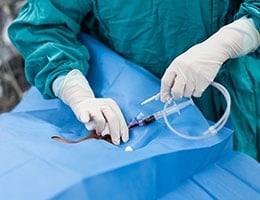
The CDC defines a Central Line-Associated Bloodstream Infection as: “A laboratory-confirmed bloodstream infection (LCBI) where central line (CL) or umbilical catheter (UC) was in place for more than 2 calendar days on the date of event, with day of device placement being Day 1 and the line was in place on the date of event or the day before.” In other words, the patient must have had the device in place for at least 2 days and the diagnosis must be made while the device is still indwelling or was indwelling on the day before.
- [Tweet](https://twitter.com/share)
## [Healthcare-Associated Infections](https://blog.thesullivangroup.com/healthcare-associated-infections)
August 28, 2017
[](https://blog.thesullivangroup.com/healthcare-associated-infections)
The Centers for Disease Control and Prevention defines healthcare-associated infections (HAIs) as: “Infections that patients acquire during the course of receiving healthcare treatment for other conditions.”
Healthcare-associated infections are very common, and the cost associated with them is enormous. It is estimated that 1 out of every 25 hospitalized patients is treated for an HAI, with costs ranging between $28 billion and $33 billion per year.
- [Tweet](https://twitter.com/share)
[All posts](https://blog.thesullivangroup.com/all) [Next](https://blog.thesullivangroup.com/topic/hospital-medicine/page/2)
[](https://info.thesullivangroup.com/case-study-dx-claims-landing-page)
### Like this Content? --- Sign up for email updates
### Popular Posts
POST SEARCH

### Connect
[Facebook](https://www.facebook.com/TSGRSQ) [Twitter](https://twitter.com/RSQ_Solutions) [YouTube](https://www.youtube.com/channel/UChAWYCblnx-aSdI8c4PYwjw/feed?view_as=public) [Google+](https://plus.google.com/109532511856522423273) [Linkedin](https://www.linkedin.com/company/the-sullivan-group-tsg-?trk=company_logo)
### Ambulatory
- [Primary Care](https://info.thesullivangroup.com/primary-care-cme-training)
- [Urgent Care](https://info.thesullivangroup.com/urgent-care-training)
- [Specialty Care](https://info.thesullivangroup.com/specialty-care-cme-training)
- Free Standing ED
- Ambulatory Surgery Center
### Enterprise
- [Physician Integration](https://info.thesullivangroup.com/physician-integration-education)
- [Nursing Clinical Excellence](https://info.thesullivangroup.com/emergency-department-nursing-training)
- [Patient Safety Fundamentals](https://info.thesullivangroup.com/patient-safety-fundamentals-training)
- [Medical-Legal Essentials](https://info.thesullivangroup.com/medical-legal-training)
- [Communication & Resolution](https://info.thesullivangroup.com/communication-resolution-training)
- [Patient Experience](https://info.thesullivangroup.com/patient-experience-training)
- [Behavioral Health & Violence](https://info.thesullivangroup.com/behaviorial-health-violence-training)
### Hospital-Based
- [Emergency Medicine](https://info.thesullivangroup.com/emergency-medicine-cme-training)
- [Obstetrics](https://info.thesullivangroup.com/training-to-improve-patient-safety-in-obstetrics)
- [Hospital Medicine](https://info.thesullivangroup.com/hospital-medicine-cme-training)
- [Surgery](https://info.thesullivangroup.com/surgery-cme-training)
- [Triage](https://info.thesullivangroup.com/triage-training)
### Contact Us
- The Sullivan Group
- 3513 Brighton BLVD
Suite 485
Denver, CO 80216
- Inquiries: [info@thesullivangroup.com](mailto:info@thesullivangroup.com)
- Comments: [comments@thesullivangroup.com](mailto:comments@thesullivangroup.com)
- Support: [support@thesullivangroup.com](mailto:support@thesullivangroup.com)
Copyright © 1998 - 2024, The Sullivan Group, All Rights Reserved.
These materials comprise the proprietary information of The Sullivan Group. Unauthorized use, copying or dissemination of these materials is strictly prohibited. U.S. Patent No. 7,197,492. Web Design By [Eye9 Design](http://www.eye9design.com)
[Terms of Website Use](https://www.thesullivangroup.com/RSQSolutions/terms-of-use/) | [Privacy Policy](https://www.thesullivangroup.com/RSQSolutions/privacy-policy/)